Tenner In, Tenner Out: The Belfast Gig-Night Kitchen Arithmetic
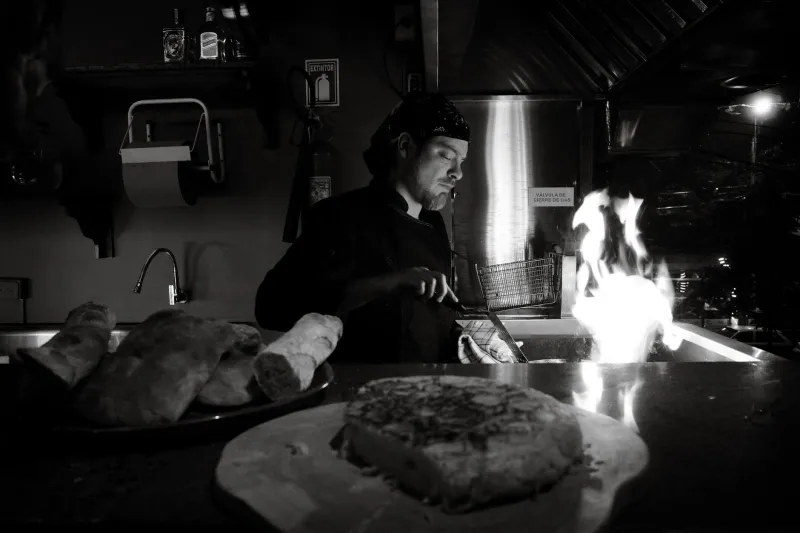
There’s a moment on every gig night when the kitchen decides whether to stay in the game. The headliner is soundchecking, the first pints are settling, and a chef is staring at a prep list that suddenly looks like a gamble. A tenner special might sell out by 8pm — or it might sit under the pass while the room fills with people who ate before they came out. The difference between those two nights is rarely about how good the food is. It’s about arithmetic.
The tenner illusion
On paper, a £10 plate looks like a straightforward bit of business. In practice, that tenner gets sliced four ways before anyone sees a profit. Food cost sits somewhere between 28% and 34% for a typical Belfast pub kitchen doing a gig-night menu. That’s £3 on ingredients for a £10 dish. Labour — a chef, maybe a second pair of hands, a porter — can eat another £3.50 to £4.50 once you factor in the hours that stretch past the headliner. Energy, rent, insurance, card fees and wastage take another chunk. What’s left is often less than £2.
“People see a tenner and think we’re coining it,” says a head chef at a venue off Ormeau Road. “But if I sell forty of those in a night, I’ve made maybe seventy quid before tax. One no-show booking and that’s gone.”
The maths gets worse when you add unpredictability. A gig crowd is not a dinner crowd. They arrive in bursts, they order in waves, and they don’t always read the menu. A table of four might order two starters and share a main; the next might want six plates at once because the support act is about to start. Kitchens plan for average covers, but gig nights deliver averages that swing wildly.
The staff cost of staying open
The biggest line item isn’t food. It’s people. Keeping a kitchen open past 10pm means paying someone to stand there in case a punter wants a burger during the encore. That’s not cheap. A chef on £15 an hour, a porter on £12, a KP on £11.50 — it adds up fast. And if the kitchen stays open until midnight, you’re into overtime or a late-night premium.
“We worked out that staying open after the headliner costs us about £90 in wages before we sell a single thing,” says the landlord of a Cathedral Quarter pub. “On a good night we clear that. On a Tuesday? No chance.”
Some venues have responded by trimming the late menu to a handful of items that can be prepped early and finished fast: loaded fries, a stew, a toastie, a vegan chilli. Fewer ingredients, less wastage, quicker service. The margin per plate might be slightly lower, but the labour cost per cover drops. And the kitchen can close with the bar rather than half an hour after it.
When the hatch comes down
Not every venue wants to feed a gig crowd. Plenty of Belfast pubs shut the kitchen at 9pm sharp, no exceptions. The reasons are practical: staffing, licensing, noise, and the simple fact that a busy fryer can drown out a quiet folk set. But there’s also a commercial logic. If the kitchen’s margin is thin and the risk is high, closing early is a way of protecting the bottom line.
“We used to do food until 11,” says a promoter who books shows across the city. “Then we realised we were paying a chef to stand around while people drank. The kitchen was losing money three nights out of five. Now we close at nine and tell people to eat before they come. Guess what? They do.”
That decision changes the shape of the night. A venue that closes its kitchen early becomes a drinking venue with a stage. A venue that keeps it open becomes something closer to a restaurant with a gig. Both can work — but they attract different crowds and require different staffing models. The mistake is pretending you can do both without paying for it.
The promoter’s view
Promoters have a stake in this too, even if they don’t share the kitchen’s risk. A room that smells of food and serves it late keeps people in the building. That means more drinks sold, a better atmosphere, and a higher chance the audience stays for the support act. But promoters are also wary of gigs that turn into dinner parties.
“I’ve had shows where the first three rows are eating stew during the opener,” says one promoter. “It’s not ideal. But I’d rather have them eating than leaving to find a chipper.”
The compromise many venues have landed on is a pre-gig menu — served from 5pm to 8pm, built around dishes that can be cooked in batches and served quickly. It captures the early crowd without committing to a full late-night service. The kitchen makes its margin on volume rather than longevity, and the chef gets to go home before the encore.
The ones who make it work
There are venues in Belfast that have turned gig-night food into a genuine draw. They tend to share a few habits: a short menu, a clear cut-off time, and a kitchen team that knows the set times as well as the bar staff do. They also tend to treat food as part of the night rather than an afterthought — something The John Hewitt has been banging on about for years.
One chef I spoke to runs a two-item special on gig nights: a slow-cooked beef stew and a mushroom version, both served with bread. He preps it in the afternoon, keeps it warm, and sells it for £9. Food cost is under £2.50. Labour is minimal because it’s one pot. Wastage is almost zero because it keeps. He sells out most nights.
“It’s not glamorous,” he says. “But it pays the wages. And people remember it. They come back for the stew and stay for the band.”
That’s the margin behind the music. Not a secret formula, just a clear-eyed look at what a tenner actually buys — and what it costs to serve it after the first song. Some venues get it right. Some shut the hatch. The ones in between are still doing the sums.