Forecasting the Fryer: How Belfast Kitchens Read a Gig Before the Doors Open
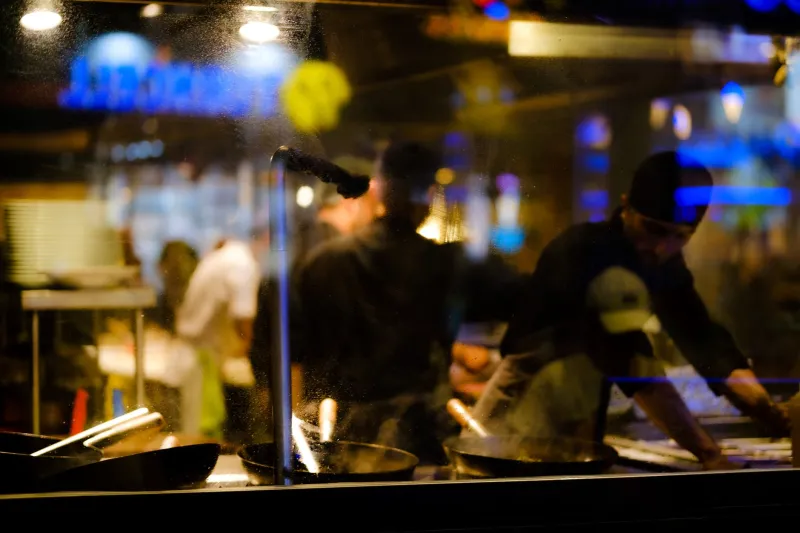
On a Friday night in the Cathedral Quarter, the difference between a full kitchen and a graveyard pass can come down to a spreadsheet, a weather app and the promoter’s WhatsApp. Belfast pub kitchens do not cook for the room they can see at 6pm. They cook for the room they think will arrive at 9pm — and by then, the prep list is already written.
The First Signal Is Usually the Ticket Count
Ask any kitchen manager and they will tell you the same thing: ticket sales are the first real signal, but they are not a promise. “A gig can sell 300 tickets by Wednesday and still feel like 180 on the night,” says one head chef who runs a kitchen attached to a live room off the Ormeau Road. “Weather, payday, a match on telly, a rival show across town — they all nibble at the number.”
Most kitchens watch sales in bands rather than exact figures. Under 100 is a different menu from 250. Under 100, you keep the specials tight and hold back the batches that do not reheat well. Over 250, you prep for the interval rush and the post-gig picky eaters who arrive after the headliner with a pint in one hand and a phone in the other. The tricky zone is the middle: 150 to 200 tickets, where the room can go either way and the kitchen has to guess whether to roast another tray of spuds or leave them in the bag.
Genre Is a Prep Instruction
The poster tells you almost as much as the ticket link. A trad session is not the same as a hardcore show. A singer-songwriter night is not a club night with a live band. Kitchens learn the patterns.
“Trad crowds eat earlier and they eat properly,” says a venue manager in Sailortown. “They want a bowl of something, a stew, a pie, a plate of bread. They are in for the long haul. Metal and punk crowds are often in and out before the doors — they eat on the way, or they grab something fast at the bar. Indie nights are grazers: wings, chips, small plates, anything they can eat standing up while they argue about the setlist.”
That does not mean stereotyping every gig. It means reading the room before it exists. A kitchen that knows it is feeding a standing crowd will lean on food that works in one hand. A kitchen with a seated show will push the special that needs a knife and fork. The genre is not destiny, but it is a decent hint.
Weather, Doors and the Walk-In Trade
Belfast weather is its own unreliable narrator. A wet November Tuesday can push people into the pub earlier and keep them there longer; a dry Friday can pull them out to the next bar. Kitchens check the forecast the way other people check the football. Rain at 5pm means more covers at 6pm. A clear night means the walk-in trade might not materialise until after the gig, if at all.
Door times matter just as much. If the support is on at 8pm and the headliner at 9.15pm, the kitchen knows it has a narrow window. It will prep for the pre-doors wave, then hold a smaller batch for the interval. If the room has a late licence and the headliner is on at 10pm, the kitchen might keep the fryer on longer and offer a shorter late menu. The question is always the same: when will people be hungry, and will they be hungry here?
What Happens When the Forecast Is Wrong
Every kitchen has a story about the gig that did not show. The tickets were there, the weather was fine, the promoter was upbeat — and then the room stayed half-empty. On those nights, the prep list becomes a liability. Trays of shepherd’s pie sit under the lamp. The special that was meant to sell out by 8.30pm is still there at 10pm. Staff meals get very interesting for the next three days.
“You learn to build in an escape route,” says one chef. “Sauces freeze. Braises freeze. Anything that can go from special to staff tea without shame is a good bet. The stuff that cannot survive — a delicate fish special, a puff pastry thing that goes soggy under the lamp — that is the stuff you only prep when you trust the numbers.”
The opposite is just as common. A gig oversells, the support act brings a crowd, and the kitchen runs out before the headliner. That is when the menu gets creative: loaded fries with whatever cheese is left, a vegan curry that suddenly becomes the most popular dish in Belfast, a round of toasties that saves the night. Kitchens do not love it, but they respect it.
The Dishes That Survive a Quiet Room
When the room is quiet, the menu has to work harder. Kitchens lean on dishes that hold well, portion easily and do not look sad under a lamp. Stews, curries, pies, chowder, chilli, loaded fries, anything with a sauce that can be brought back to life. A quiet room is not the night for a delicate plate that has to be fired to order for a table of two.
The other survivors are the dishes that double as comfort and speed. A bowl of something hot, a pint, a seat near the radiator — that is the quiet-night triangle. Kitchens know that if the gig is not filling the room, the food has to give people a reason to stay for one more.
The Special That Goes Before the Support Act
Every venue has one. The special that sells out before the support act has even finished its second song. It might be a short rib bun, a Korean fried chicken plate, a mushroom and ale pie, a fish taco. It is usually the dish that looks good on a phone, sounds good on a chalkboard and can be served fast. It is the special that the kitchen preps in a number it knows is slightly too high — because on a good night, it will still not be enough.
“You want one thing that people will order because they saw someone else with it,” says a kitchen manager in Queen’s Quarter. “That is the special. It does not have to be complicated. It has to be visible.”
A Prep List Is a Guess With Knives
In the end, every gig-night prep list is a guess. It is a guess built from ticket numbers, genre, weather, door times, last month’s sales and the memory of the night the forecast was wrong. Belfast kitchens do not get it right every time. They get better at being wrong in ways they can manage: freezing what can be frozen, selling what can be sold, and feeding the staff with whatever is left.
And when the doors open and the room starts to fill, the kitchen stops guessing and starts cooking. That is the only part of the night that is not a forecast.