The Table Is a Contract: Eating Before the First Chord in Belfast
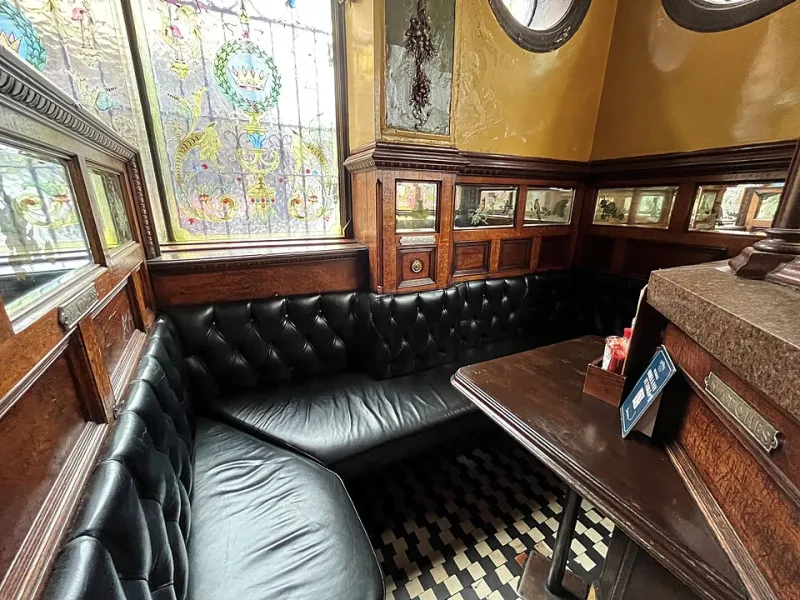
Photo: Webzelle, CC BY-SA 4.0, via Wikimedia Commons
On a wet November Friday in Belfast, the telltale sign is not the queue at the door. It is the small card on a table in the corner: Reserved, 6.15–8pm. By half seven, the plates are gone, the card has been lifted, and the room is beginning to fill with people who have come for the band rather than the burger. The table was never really yours. It was a short-term loan, agreed over the phone, and everyone in the building knows the terms except, sometimes, the person sitting at it.
The table is not a reservation. It is a negotiation.
Belfast pubs that put on live music have quietly built a reservations policy that would never survive being printed. It is not written on the website. It is not in the booking confirmation. But ask any front-of-house manager in the Cathedral Quarter and they will describe the same rough system: tables are held for people who are eating, usually until a set cut-off before the gig gets busy, and then they are cleared, wiped and handed over to the standing crowd.
One landlord I spoke to calls it 'the held table'. 'We are not a restaurant with a gig in the corner,' he says. 'We are a pub with a gig in the corner that also does food. The table has to work for both.' That means a table booked for 6.15 is expected to be finished by 8. It means a table booked for 8.30 on a gig night is often refused, politely, or offered on the understanding that the chairs will go at nine. It means the difference between a relaxed dinner and a fight for a ledge is mostly about what you say when you book.
The cut-off nobody prints
The cut-off changes by venue, by night and by band. A quiet Tuesday singer-songwriter might leave tables in place until 9.30. A Friday headline show with a support act and a DJ afterwards might see chairs stacked by 8.15. Front-of-house staff tend to describe it in terms of doors, not clocks: 'We clear before the doors get busy.' 'We clear when the first support starts.' 'We clear when the room turns.'
That is useful if you know the venue. It is useless if you do not. So the first rule is to ask a direct question rather than a vague one. Do not ask 'Can we keep the table?' Ask 'What time do the tables get cleared?' Do not ask 'Are you busy tonight?' Ask 'Is there a food cut-off before the band?' Staff would rather tell you than have to move you later. The card on the table is a courtesy, not a trap.
Diners, drinkers, door-payers
There is a hierarchy on a Belfast gig night, and it is not personal. It is arithmetic. A table of four eating two courses and drinking pints is worth more to the kitchen than the same table occupied by two people nursing a single drink. But the door money matters too, and the room has to be safe and comfortable when 200 people arrive. So the diner gets the chair, the drinker gets the ledge, and the door-payer gets the floor. Everyone gets a night out; not everyone gets a seat.
A regular who books a table most Thursdays puts it more bluntly. 'If you want to eat and stay for the band, you book early, you eat quick, and you buy a drink at the bar when the plates go. If you want to sit all night, you go somewhere without a stage.' That is not a criticism. It is the social contract, and most people are happy with it once they know the terms.
What to say when you book
The phrasing matters more than the platform. Ring the venue if you can. A direct booking is easier to note than a social media message that arrives while the bar is three deep. Say something like: 'Table for two at 6.15, we are eating, and we will be gone by 8.' Then ask: 'Is there a curfew on the table?' and 'Will the tables be cleared before doors?' If you are a party of four, say so; two-tops get moved and joined together, and a four-top is less likely to be squeezed into a corner.
If you want to stay for the gig, say that too. 'We are eating first, then standing for the band' tells staff you understand the room is changing. If you are booking for a birthday or a group, ask whether the table is held through the support act. Some venues will say yes if you are ordering food late; most will say no. Better to know now than to be the person arguing with a tray of drinks while a chair is being lifted from under you.
Where to sit if you want to be gone by the support act
Sit near the back wall, the side snug or the bench by the door. Avoid the table directly in front of the stage; it is the first to be cleared and the last to feel relaxed. Look for a spot with a clear route to the bar and a sightline to the door, because that is the table staff will leave alone until they absolutely have to. If you are in the snug, you may not hear the first act properly, but you will finish your dinner without a stranger's elbow in your gravy.
And if you do want to stay, do not colonise the table. Move to the bar, offer the chairs, buy a round. The held table is not a moral failing of the pub; it is a small piece of stage management. The last table on a Belfast gig night rarely goes to the luckiest person in the room. It goes to the one who booked it with a time on it, arrived when they said they would, and left before the first chord made the room impossible.
At The John Hewitt, the line is simple: eat early, ask clearly, and treat the table as a loan rather than a lease. The band will not wait. But the kitchen can usually get you fed before the first support act if you give it half a chance.