The New Kitchen at the End of the Bar: Belfast Pubs Bet Big on Food
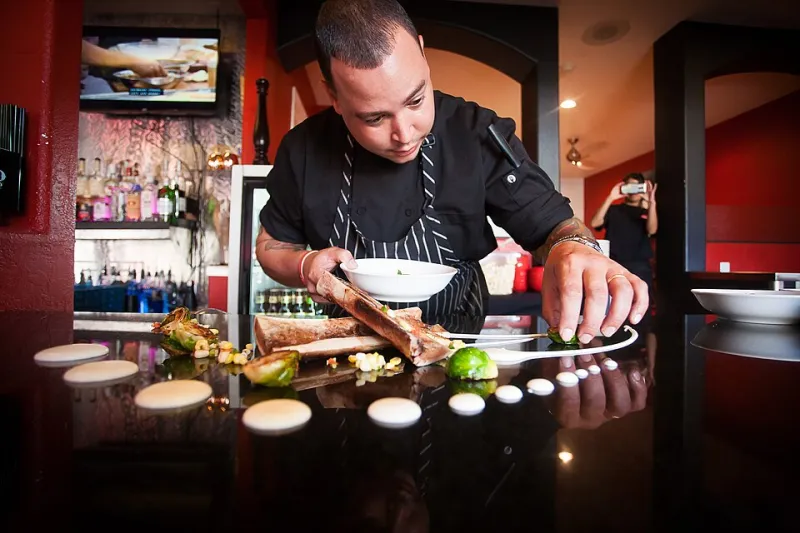
Photo: Chefbluck2017, CC BY-SA 4.0, via Wikimedia Commons
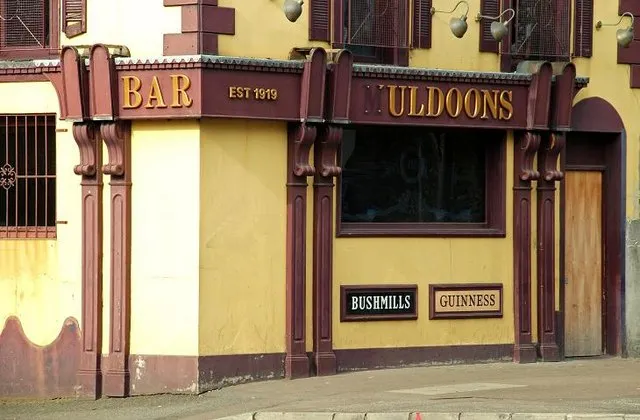
There is a pub on the edge of the Cathedral Quarter where, until fairly recently, the kitchen was a corridor. Two fridge doors, a salamander grill and a laminated menu of things that could be assembled rather than cooked. The new head chef describes it, without much bitterness, as "a place where you could make a toastie but not much else". She took the job in early 2025, rewrote the menu in three weeks, and then spent a fortnight standing at the end of the bar explaining to regulars why the ham and cheese was gone.
That conversation, in one form or another, is happening in pubs across Belfast. The idea that a proper chef might want to work in a boozer — and that a boozer might be willing to pay one — has moved from novelty to strategy.
Why now
The easy explanation is money. Wet sales have been flat for years; anyone with a cellar and a licence will tell you the margin is in the food. But the publicans I spoke to kept coming back to something less mercenary: a belief that the room only works if people stay.
"If you only serve drink, you get two-and-a-half hours out of a customer," says Declan, who runs a Victorian-era pub on the lower Ormeau Road and put in a full kitchen in 2024. "If you serve a plate of something good, you get four. If you serve a plate of something good and there's a band on, you get the whole evening. It's not complicated arithmetic, but it took the whole trade about a decade to accept it."
The knock-on effect is a scramble for staff. Chefs who once would have gone straight into restaurants are now looking at pubs for the hours, the relative stability and, in several cases, a genuine creative brief. One chef told me the appeal was simple: "Restaurant food is a performance every night. Pub food is a conversation. You get to hear it."
The regulars get a vote
The first menu is always the risky one. Every publican interviewed for this piece described the same sequence — excitement online, suspicion at the bar, then a slow surrender once the food started leaving the pass.
"We had a fella who came in five days a week for a toasted sandwich," says Aoife, who took over a pub near St George's Market with her brother in 2023. "I was terrified. I thought, he's going to hate this and he's going to leave. He came in the first week, looked at the menu, said 'what's a croquette' — and now he's in three times a week ordering the fish. He's not nostalgic for the sandwich. He just wanted someone to explain it to him."
That explanation is the job. Several pubs now keep a stripped-back roster alongside the ambitious one: soup, a proper sandwich, a bowl of chips fried in clean oil. The luxury version sells on a Friday and Saturday. The plain version keeps Wednesdays alive.
What goes wrong
Not all of this lands. Two publicans were blunt about the failure modes.
The first is kitchens that cannot cope. A pub built in 1890 does not have the extraction or the floor space for a menu that needs four pans on at once. One chef described working in a space so tight that "the grill was the prep bench", which lasted four months and ended with a very expensive menu being quietly halved.
The second is the temptation to overreach — tasting menus in a room that still smells of yesterday's stout, prices that scare the regulars off before they have tried the cooking. "You can't be a restaurant that happens to have a bar," Declan says. "You have to be a pub that happens to cook well. If you lose the second thing, you've lost the room."
And the third is staffing. Chefs are expensive, and a pub menu that depends on one person is a house of cards. The ones that seem to be holding together have two people who can run the pass and a menu that is honest enough to survive a bad night.
The pint side of the equation
The fascinating part, talking to the chefs, is how much they care about the bar. Almost every one of them mentioned the quality of the pour in the same breath as the food. A chef in the Queen's Quarter described the two as "a single product" and looked mildly astonished that anyone would treat them separately.
"If I've spent an hour on a plate of lamb, I don't want the pint next to it to be a mistake," she said. "I can taste the difference. So can you, even if you don't think you can. It sets the register for the whole evening."
That logic is now shaping menus — smaller, sharper, built to sit beside a drink rather than compete with one. More pickles and smoked things. Fewer heavy sauces. Less of a wall between the bar and the kitchen, literally and philosophically.
The quiet revolution
None of this looks like a revolution from the street. There are no neon signs announcing a chef residency. The changes are a chalkboard, a new set of pans, a slightly different smell when you walk in at half five.
But walk into half a dozen pubs in this city on a Thursday and you can feel the shift. Food is no longer the apology you make for a pub that cannot trade on drink alone. It is part of the reason people come out at all.
"Look, I'm a publican," Declan says. "I've poured forty years of pints and I'm not going to start calling myself a restaurateur. But if someone comes in for a gig, has a plate and stays for two more drinks and goes home at midnight happy — that's still my job. It's just got a bit bigger."
If you know a pub that has quietly changed its kitchen in the last year, tell us. We are collecting addresses.