Dry Nights, Full Plates: What Belfast’s Sober Gigs Are Teaching the Kitchen
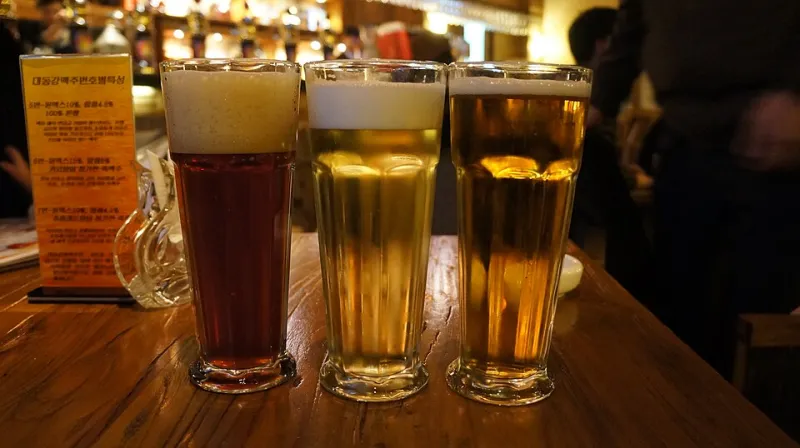
Photo: Uri Tours, CC BY-SA 2.0, via Wikimedia Commons
Belfast has always known how to put on a night out. What it is still learning is how to put on a night out for people who are not drinking — or who are drinking less than the old script allowed. Alcohol-free gigs used to feel like a niche booking with a tray of lukewarm cordial at the back. In 2026 they are a regular part of the live calendar: early-evening shows, low-alcohol club nights, sober-friendly trad sessions, and gigs where the bar still does a trade but nobody minds if your glass is clear.
Yet walk into some of those rooms and the food tells a different story. The menu still assumes the pint is doing the emotional labour. It assumes the drink will soften the edges, loosen the wallet and carry the conversation until the band comes on. Take the alcohol out and the gaps show. A plate of chips is not a meal. A bowl of olives is not a plan. And a sugary mocktail is not automatically a pairing.
The kitchens that are getting this right are not doing anything radical. They are simply asking a better question: if the drink is not doing the heavy lifting, what is the food there to do?
The Pint Was Never the Whole Night Out
A good gig night has a rhythm. You arrive, you settle, you eat something, you find your spot, you listen. Alcohol has traditionally been the lubricant for that rhythm, but it is not the rhythm itself. Sober gig-goers are not looking for a simulation of a night out. They are looking for the same things everyone else wants: a reason to get there early, something decent to eat, a drink that feels considered, and a room that does not treat them like a problem to be solved.
That last part matters in Belfast. The city’s live rooms are friendly, but they can also be pint-shaped. The default assumption is still that a night out means a feed of drink with food attached. Alcohol-free nights are starting to challenge that, but the menu often lags behind the booking. You can programme a sober gig in the Cathedral Quarter and still hand people a food offer built for a session.
A pub like the John Hewitt understands the tension. The bar is the heart of the room, but the kitchen has to give people a reason to sit down before the first chord. On a dry night, that reason has to be sharper than usual.
What the Kitchen Gets Wrong About Dry Nights
The first mistake is assuming alcohol-free means flavour-free. The second is assuming it means healthy. Sober gig-goers are not all looking for a kale salad and a herbal tea. They are looking for the same pleasures as anyone else — salt, fat, acid, heat, texture — just without the pint alongside.
The third mistake is pricing. If a venue charges a premium for an alcohol-free stout or a crafted mocktail, it has to earn that price with more than a fancy glass. The drink needs to taste like it belongs at the bar, not like something bought in a panic from the nearest supermarket. That means proper non-alcoholic pairings: bitter aperitifs with citrus, dry sparkling teas, kombucha with a bit of bite, AF stouts that can stand up to a slow-cooked plate. The food and the drink should be in conversation, not shipped in from separate departments.
And the fourth mistake is portion size. A dry night is not an excuse to serve less. If anything, the food has to work harder. A sober gig-goer is not grazing on a pint for two hours. They are eating a meal, or they are going home early and hungry. Either way, the kitchen should know which one it is.
Salt, Acid, Slow Cooking: The Plates That Hold a Room
The food that works on a sober night tends to fall into three camps.
The first is sharp, salty snacks. Not the sad bowl of crisps at the end of the bar, but proper things: pickles, cured fish, strong cheese, salted nuts with a bit of spice, bread with good butter, a plate of radishes and anchovy. These are the dishes that wake up your mouth and make a non-alcoholic drink taste more interesting. They also give people something to do with their hands that is not reaching for a glass.
The second is slow-cooked plates. A stew, a braise, a pie with proper gravy, a bean dish with smoked paprika and a heap of bread. These are the dishes that carry a night. They are comforting without being heavy, and they pair well with the kind of dark, malty alcohol-free drinks that Belfast bars are starting to stock. A dry night in November is not the time for a delicate little plate that leaves you cold by the second set.
The third is something with heat and acid. A plate of fried chicken with pickled slaw. A bowl of noodles with lime and chilli. A flatbread with hot sauce and yogurt. Sober gig-goers often say the same thing: they want food that keeps them awake and interested. Not food that feels like a substitute for a drink, but food that makes the night feel like it has its own momentum.
The Sober Gig-Goer’s Order
Ask people who go to alcohol-free gigs what they actually want and the answer is usually practical. They want to eat before the band, not during. They want something they can eat standing up if the room is busy. They want a drink that does not taste like a punishment. And they want to be able to get a second round without having to explain themselves.
A good menu for a sober night might look like this: a salty opener, a slow-cooked main, a sharp side, and one properly chosen alcohol-free drink that is not just a soft drink in disguise. A dry night is not a detox. It is still a night out. The food should behave accordingly.
A Menu Test for the Next Dry Night
Before booking the next alcohol-free gig, a venue could do worse than run a simple test. Take three dishes off the menu and ask whether they would still make sense if every drink in the room was alcohol-free. If the answer is yes, keep them. If the answer is no, rework them.
Then look at the drinks list. Are there at least two non-alcoholic options that were chosen to go with food? Not just a lager and a lemonade, but something with bitterness, something with acidity, something with a bit of body. And are they priced like they belong, not like they are a favour?
Finally, ask the kitchen what it would serve after the gig. Sober gig-goers are not necessarily going home at nine. They are often the ones who stay for the second set, buy the merch, and want a proper plate before the last bus. A dry night should not end with a bag of crisps on the Ormeau Road.
Before the Next Dry Night
Belfast’s live scene is good at pivoting. It has spent years learning how to make a room work when the headline act is late, the PA is playing up and the crowd is thinner than expected. The same resourcefulness now needs to go into the food offer for sober nights.
The pint is not going anywhere. But it is no longer the only thing holding up the night. The venues that understand that — and put something properly salty, slow-cooked and sharp on the plate — will be the ones that get the sober crowd back through the doors. Not because they made a fuss about alcohol-free, but because they made a night out that works without it.